
How long does it take?
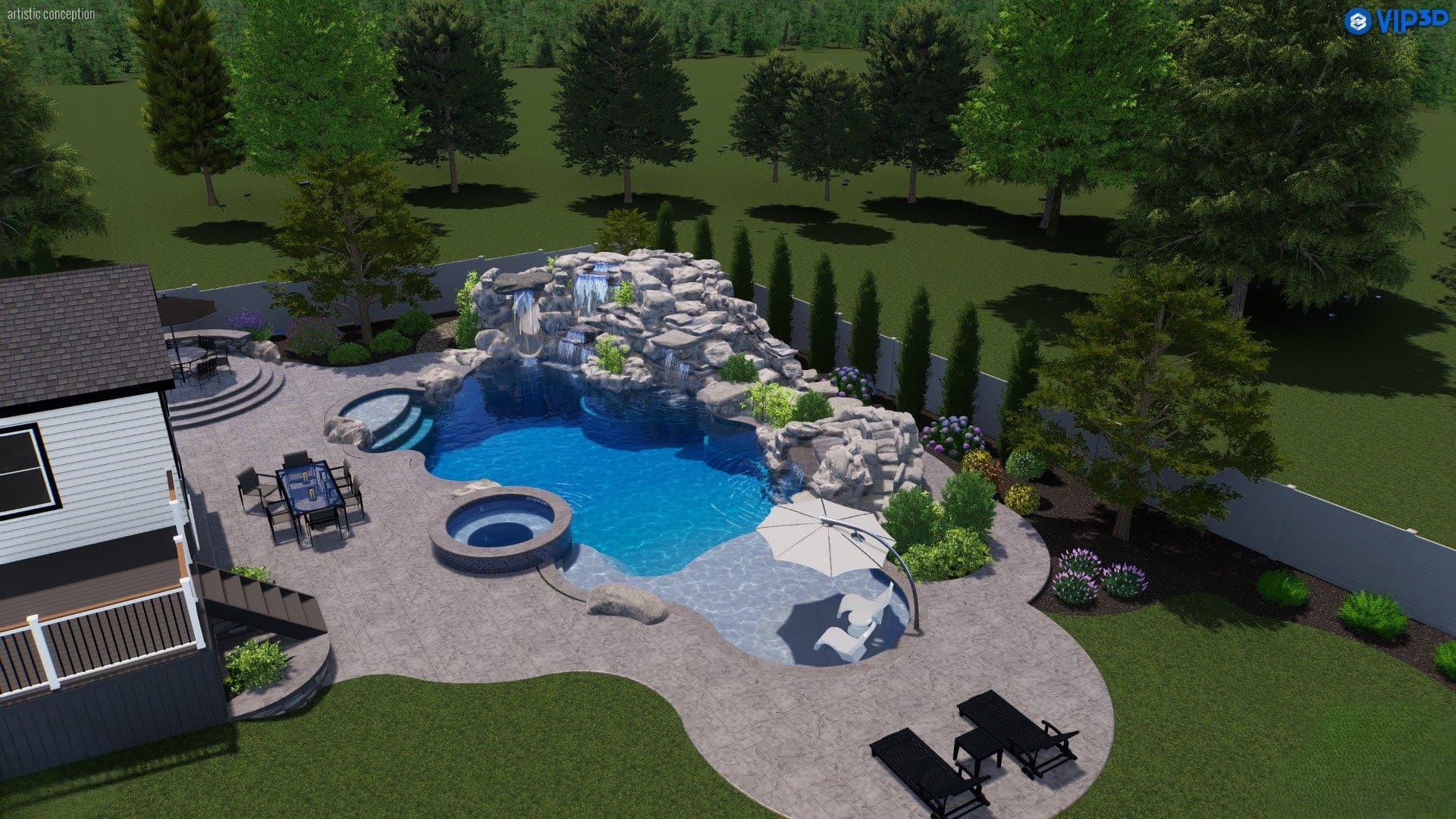
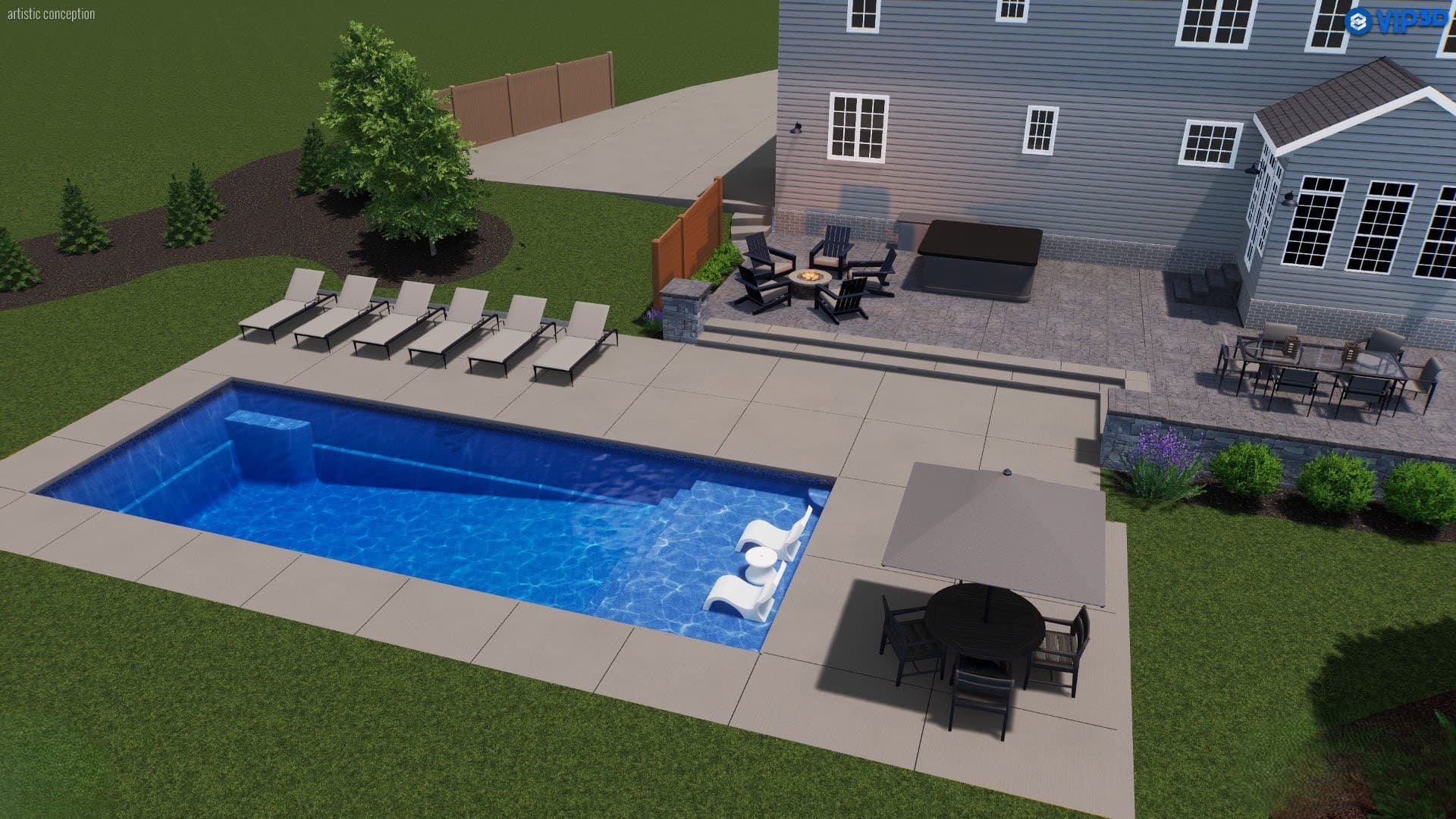
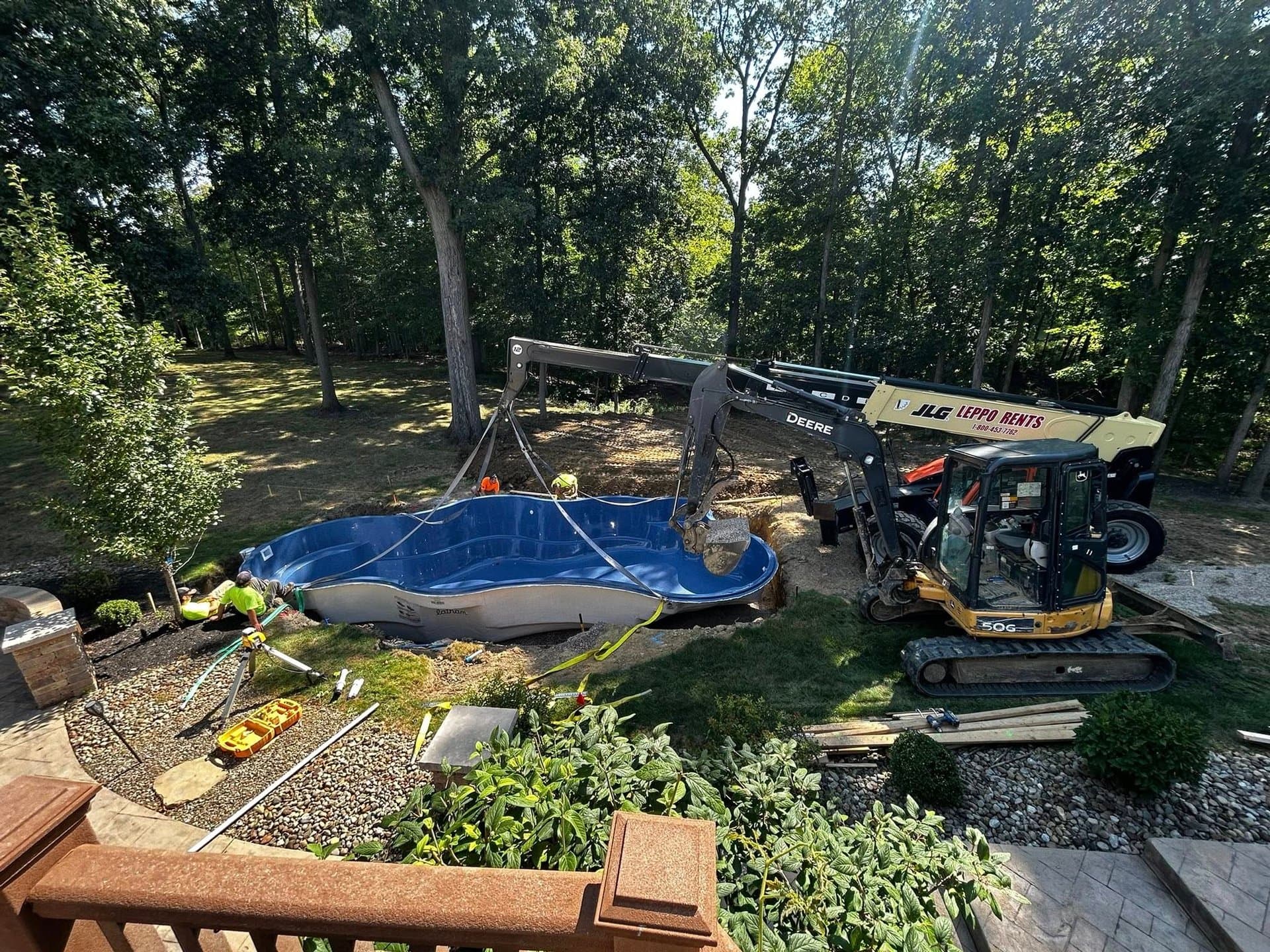
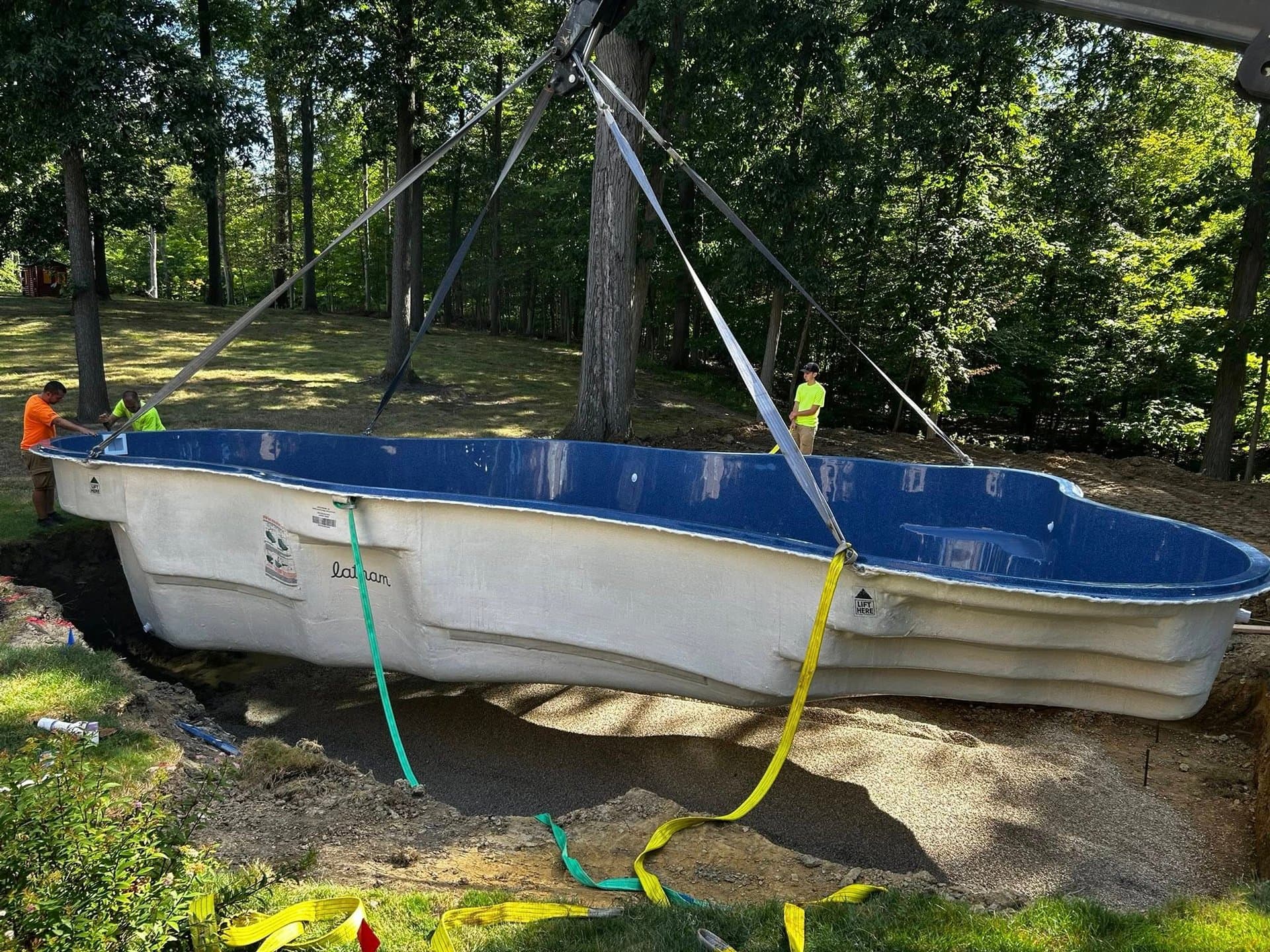
Once the permit is issued, River Pools puts a typical fiberglass install at about 3 to 5 weeks, with the excavation, set and backfill taking only a few days of that. Most of the calendar goes to the gaps between stages: inspections, waiting on weather to pour, electrical work and scheduling each trade. The same source puts vinyl liner pools at about 6 to 8 weeks. Design and permits come before any of it.
Rain is the biggest day-to-day factor here, because a heavy storm can fill an open dig in clay. If you want to swim by Memorial Day, start the design in fall or winter. Our guide on how long it takes to build an inground pool in Ohio goes through the timing in detail.
Questions we get
Who pulls the permits?
We do. We prepare the plans for your town, including the barrier, and handle the building, zoning and electrical approvals it requires.
Do I need to call 811?
No. Ohio law puts that on the excavator. Tell us about any private buried lines, such as a line to a detached garage, since the utilities will not mark those.
What if the hole fills with water?
It happens often in Northeast Ohio clay. We pump it out and build in a way to relieve groundwater pressure under the pool before the shell goes in.
Why is a fiberglass pool filled while it is backfilled?
Filling and backfilling in matching steps keeps the pressure equal on both sides of the wall, so the shell stays level and true.
Can a pool be built in the fall?
Yes. A late summer or fall install lets the ground settle over winter, and the pool is ready to open in spring. Concrete pours after mid October need cold weather planning.
Sources
- River Pools: How long does it take to install a fiberglass pool? (stage durations, permitting, vinyl and concrete comparison)
- Latham Pool: Timeline for building a fiberglass pool (base, set, backfill and fill)
- Ohio Revised Code 3781.28: excavator notifying protection service
- National Weather Service Cleveland: Frost and freeze information (1991 to 2020 normals)
- For Construction Pros: ACI guidance on cold weather concrete placement (40°F, 500 psi)