
Why a spa makes sense in Northeast Ohio
Our swim season is short. Left alone, a pool here is comfortable from about Memorial Day to Labor Day, and a heater and cover buy you some weeks at each end. A spa is different. It is a small body of water, so it heats fast, and you can use it on a cool night in early May or on a clear October evening when nobody would dream of swimming.
That changes how much use you get out of the backyard. In spring and fall, the spa may well be the part of the yard you use most. Kids like it after a swim when the pool has turned chilly. Adults like it after work. If you are building a pool anyway, the plumbing, the electrical and the equipment pad are already being planned, which makes this the best time to add a spa.
Spillover spa or separate spa?
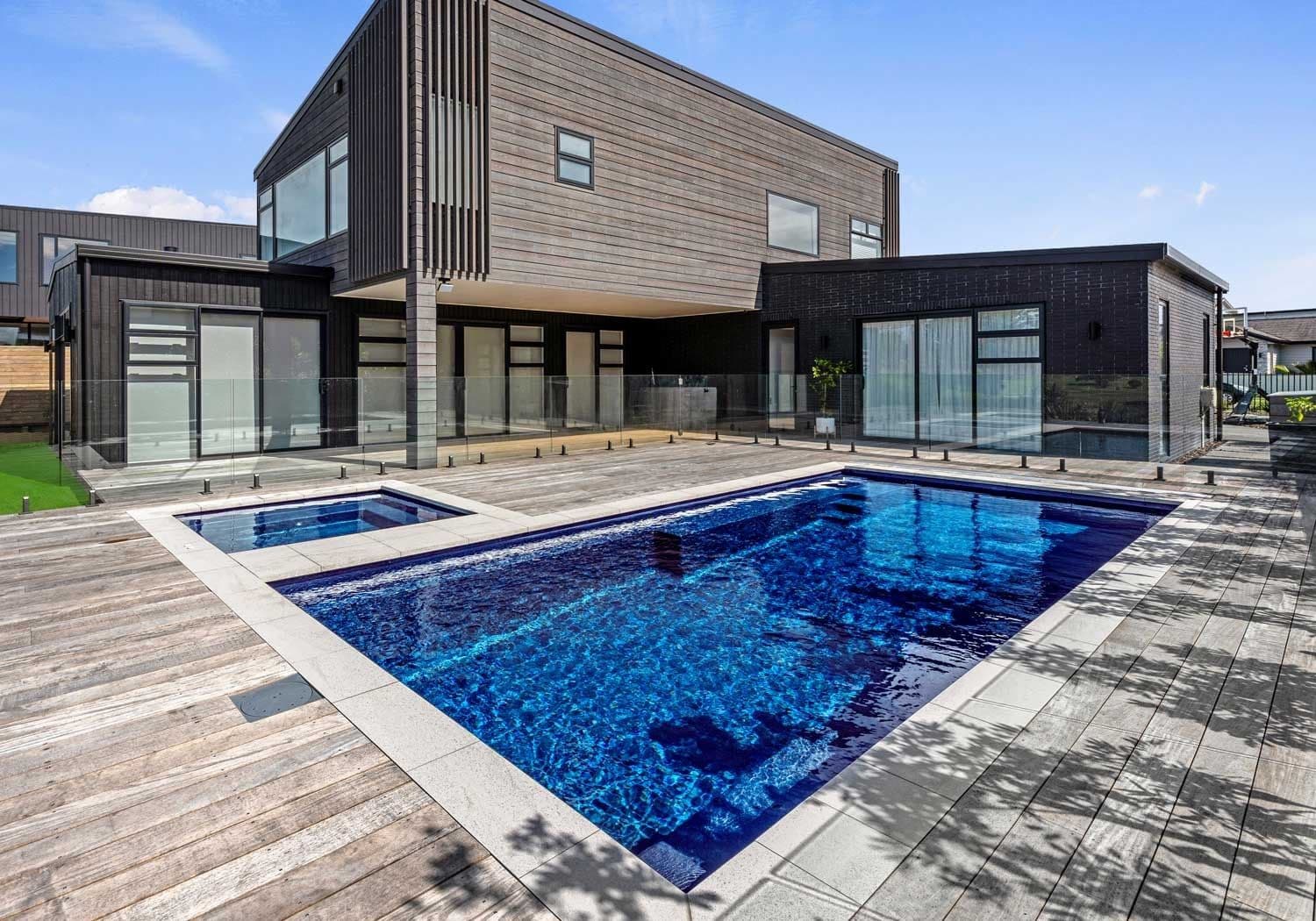
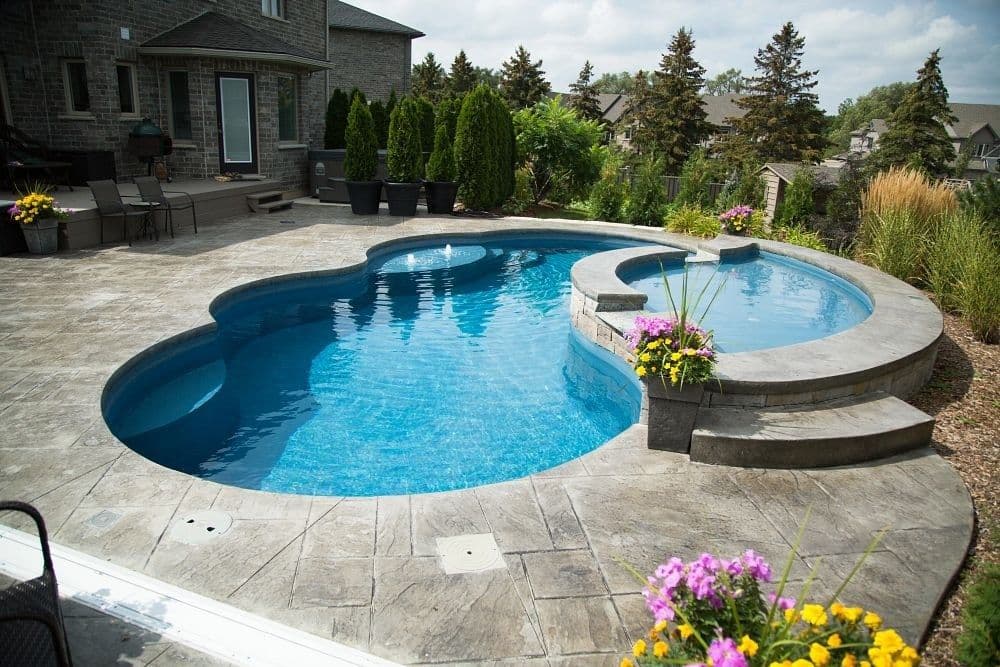
A spillover spa is built at the edge of the pool, usually a little higher than the pool's water line. Water from the spa flows over a lip and into the pool. It looks good, it sounds good, and it ties the two into one design. In most setups the spa shares the pool's pump and filter, and valves switch the water between pool mode and spa mode. When the spa is heating, the valves send the heater's output to the spa alone, so it warms up quickly.
A separate spa sits somewhere else on the patio with its own edge and its own place in the design. Some people like it set apart, closer to the house or tucked under a pergola, so it feels like its own room. Depending on the layout it may share equipment with the pool or have its own.
For most families building a new pool, we lean toward the spillover. It is simpler to use, it shares equipment, and it looks like it was planned from the start, because it was. A separate spa makes more sense when the pool is far from the house or when you plan to use the spa through the winter, which we cover below.
How the spa gets designed
Every pool we build gets a 3D design before we dig, and the spa goes into that model. You see where it sits, how high it rises above the pool, where the steps are and how the deck works around it. Small things matter here. You want the spa close enough to the back door that walking to it in October is not a hike. You want the seats facing the view you like, not the neighbor's garage. And you want enough deck between spa and pool that people can get in and out without crowding each other.
Inside the spa, we talk through seating, jets and depth. A spa for two adults is a different design from one the whole family piles into. Lighting is worth thinking about too. LED lights in the spa and the pool make an evening soak, which is when most spa use happens, a lot more pleasant.
Heating, controls and running costs
A spa needs a heater, and the heater usually serves the pool as well. We talk through gas and heat pump options during the design, based on what fuel you have at the house and how you plan to use the spa. A heat pump pulls heat out of the air, and the Department of Energy says it works efficiently as long as the outside temperature stays above roughly 45 to 50 degrees. A gas heater burns natural gas or propane, so a cold night does not slow it the same way. For a spa that gets used on cold evenings, that difference matters.
Automation makes a spa much easier to live with. With smart controls you can switch the system to spa mode and start the heater from your phone on the way home, so the water is warm when you get there. Without it, someone has to walk out to the equipment and turn valves.
On temperature: the U.S. Consumer Product Safety Commission advises that hot tub water should never be above 104 degrees Fahrenheit, and it calls 100 degrees safe for a healthy adult. Young children and pregnant women need more caution. Most spa controls let you cap the temperature, and we set that up at startup.
Using a spa in an Ohio winter
This is the question to answer early, because it changes how the spa is built. A spillover spa that shares equipment with the pool is normally closed for the winter along with the pool. The lines get blown out and the equipment gets winterized, and the spa sits quiet until spring. That suits most families.
If you want to soak in January with snow on the deck, tell us at the design stage. Running a spa through a Northeast Ohio winter means the water and everything it passes through have to keep moving and stay warm, every day, because freezing water in the lines does real damage. That affects the plumbing layout, the equipment and how the cover is chosen. It can be done. It just has to be planned, not improvised in November. Owners in the snowbelt parts of Geauga and Lake counties should also think about how they will clear a path to the spa after a lake-effect storm.
Barriers and covers
A spa is covered by the same barrier rules as a pool. The International Swimming Pool and Spa Code, the model code behind many local pool barrier rules, sets out the fence and gate requirements for pools and spas. It also has a specific allowance for spas: where a spa or hot tub has a lockable safety cover that meets the ASTM F1346 standard, the area around it does not have to meet the separate barrier provisions. A spillover spa sits inside the pool's barrier anyway, so this mostly matters for a spa set apart from the pool.
Local rules can add to the code, so we confirm with your town's building department during the permit process and draw the barrier into the plans. Either way, a good cover is worth having on any spa. It keeps the heat in, keeps leaves out and keeps small children out when nobody is watching.
Water care for a spa
Hot water, a small volume and several people at once make spa water harder to keep balanced than pool water. The CDC recommends free chlorine of at least 3 ppm in hot tubs, compared with at least 1 ppm in pools, and a pH between 7.0 and 7.8. Test it before you get in, especially after a busy weekend. On a spillover spa that shares the pool's system, the water mixes with the pool in normal operation, which helps, but the spa still needs checking when it is being used on its own. Our pool service crew can take on the testing and balancing if you would rather not.
Cost and who builds it
A spa is priced as part of your pool design, since the size, the seating, the finish and how it ties into the pool and the equipment all vary. For planning, our fiberglass pool packages start at $68,400 installed, and a spa is an upgrade on top of the pool you choose. We lay out the price for both after the site visit, and we work with lenders including PoolLoan.net and HFS Financial if you plan to finance.
Ohio State Pools is veteran owned and operated. Our lead designer, Mike, has more than 40 years designing and building pools and was featured on HGTV's Pool Kings. Todd Stump, the owner, has over 13 years in high-end construction, including custom pools.
Questions we get
What is a spillover spa?
A spa built at the edge of the pool, a little higher than the pool, so its water spills over into the pool. It usually shares the pool's pump, filter and heater.
Can I use a spa year round in Ohio?
Yes, if it is planned for it. A spa that runs through winter has to keep water moving and warm every day to avoid freeze damage, which affects the plumbing and equipment. Tell us at the design stage.
How hot can a spa be?
The Consumer Product Safety Commission advises never going above 104 degrees Fahrenheit and calls 100 degrees safe for a healthy adult. We set a temperature limit at startup.
Can you add a spa to a fiberglass pool?
Yes. Spas and spillover spas are one of the most common upgrades on the fiberglass pools we build, and we design them together in 3D.
Does a spa need its own fence?
A spa falls under the same barrier rules as a pool. The ISPSC exempts a spa area from the separate barrier provisions when the spa has a lockable ASTM F1346 safety cover, but local rules can add to that. We confirm with your building department.
Gas heater or heat pump for a spa?
A heat pump is efficient when the air is above roughly 45 to 50 degrees, according to the Department of Energy. A gas heater is less affected by cold air. For a spa used on cold evenings, gas is often the better fit, but it depends on what fuel you have.
Does a spa need different chemistry from the pool?
It needs closer watching. The CDC recommends at least 3 ppm free chlorine in hot tubs, against at least 1 ppm in pools, with pH between 7.0 and 7.8.
Sources
- U.S. Consumer Product Safety Commission: hot tub temperatures should never exceed 104 degrees Fahrenheit
- International Code Council: Code Corner on 2021 ISPSC Chapter 3 (spa safety cover barrier allowance)
- International Code Council: ISPSC Chapter 3, Section 305 barrier requirements
- U.S. Department of Energy, Energy Saver: heat pump swimming pool heaters
- CDC: home pool and hot tub water treatment and testing
- Latham spill-over spa product listing (shared pump and filter with the pool)