
Why the base matters more than the surface
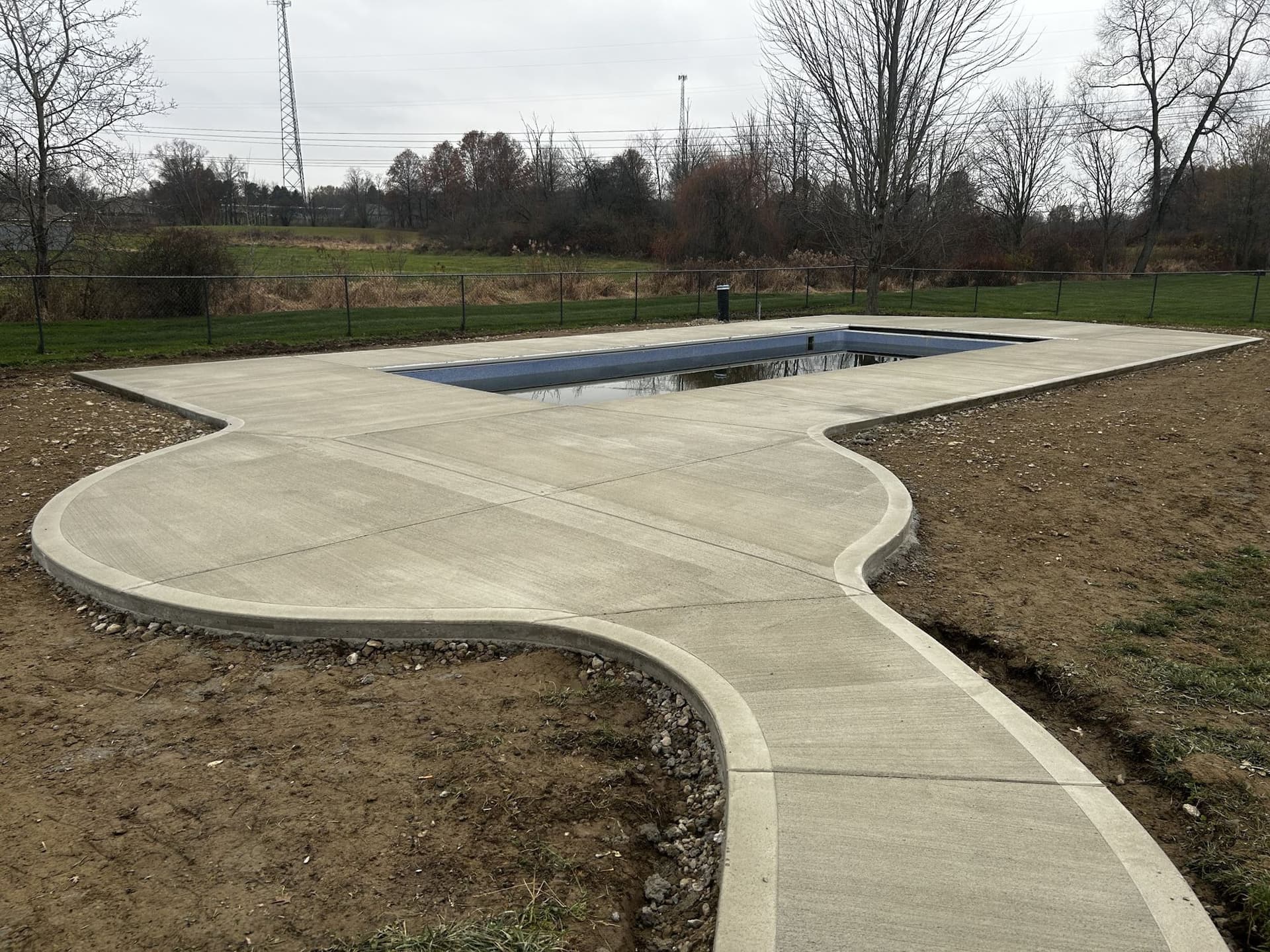
People pick a deck by how it looks, which is fair. But whether it still looks good in ten winters depends on what is underneath. Most of Northeast Ohio sits on glacial till, a dense mix of clay and silt that holds water and drains slowly. Wet soil that freezes expands. When it thaws it softens and settles. A slab or paver field set on that ground without a proper base will heave in some spots and sink in others, and water will start to pond where it should run off.
So the work starts below grade. We dig out the topsoil and soft material, bring in a stone base, and compact it in layers rather than all at once, because a thick lift of stone compacted from the top stays loose at the bottom. We shape the grade so water moves away from the pool and away from the house. Where the ground is wet, we add drainage. It is the least exciting part of the job and the part that decides how the deck ages.
Frost depth is part of the picture too. Summit County requires deck footings to reach 38 inches below grade, which gives a sense of how deep the cold reaches here. A flat slab on grade does not need footings, but anything structural on or next to the deck, such as a raised step, a seat wall or a pergola post, has to be planned around that frost line.
Concrete pool decks
Poured concrete is the most common pool deck we build, and every fiberglass pool package we sell includes a 4 ft concrete wrap deck around the pool. Concrete can be finished several ways:
- Broom finish is the plain, textured surface you see on good sidewalks. It is grippy when wet and the simplest finish we pour.
- Stamped concrete is pressed with patterns and colored to look like stone, slate, brick or wood. It gives you the look of those materials in one continuous slab.
- Exposed aggregate has the top layer of cement paste washed away to show the stones in the mix. It has a pebbled texture that is comfortable underfoot and good at hiding dirt.
For our climate, the mix matters as much as the finish. The American Concrete Institute explains that air entrainment, a controlled amount of microscopic air bubbles in the concrete, gives the water inside the slab room to expand when it freezes and cuts down on the scaling that deicing chemicals cause. The concrete industry's guidance for slabs exposed to freezing, thawing and deicers calls for air-entrained concrete of adequate strength, careful finishing and proper curing. We follow that. A deck that scales and flakes after two winters usually got one of those steps wrong.
Concrete does crack. The goal is to control where. We cut or tool control joints so the slab cracks along straight lines we chose, instead of across the middle of the deck.
Pavers and natural stone
Pavers are individual units set on a compacted base with sand joints. Their big advantage in Ohio is that the surface is made of many small pieces rather than one slab. If a section settles, or a unit cracks, it can be lifted, the base fixed and the pavers reset, and the repair does not show. There is a wide range of colors, shapes and textures, and pavers suit curved layouts well.
Natural stone, such as flagstone or cut stone, gives the most distinctive look, and each piece is a little different. It needs the same careful base as pavers or concrete. Some stone is better suited to freeze and thaw than others, so we talk through choices with you before you fall for one that will not like our winters.
Which is better, stamped concrete or pavers? There is no single answer. Stamped concrete gives a continuous surface with fewer joints to weed or top up. Pavers are easier to repair and hide small movements better. We will price both for your deck if you are deciding between them.
Coping, steps and the pool edge
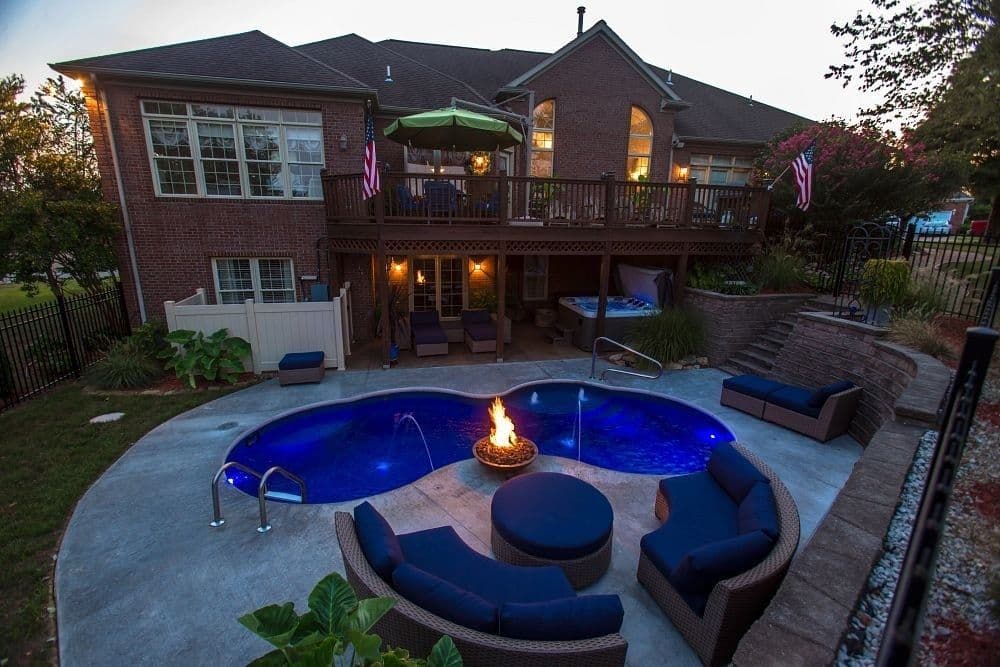
Coping is the cap along the edge of the pool, where people sit, push off and climb out. It gets wet all the time, it catches the most sun and it takes the most wear. Depending on the pool and the look you want, coping can be poured concrete, pavers or natural stone. We pick materials that are comfortable to sit on, not slippery and suited to freeze and thaw, and we detail the joint between the coping and the deck so water does not get down behind it.
Steps come up in most yards, since few backyards are flat. Steps from the house to the deck, from the deck to the lawn or between two patio levels are built on the same compacted base, with footings where the design needs them, and finished to match the deck.
How big should a pool deck be?
Bigger than most people plan for, in our opinion. A 4 ft band around the pool gives you a clean walking edge. It does not give you room for loungers, a table, a grill and people walking past all at once. Think about where the chairs go, where the sun is in the afternoon and where people will walk from the back door to the pool. Leave room for the fence line and the equipment pad too. Many families add a larger patio area on the side of the pool closest to the house, where it can double as an outdoor dining space.
This is why we lay out the deck in the same 3D design as the pool. You can see how the space works, add or remove square footage and move furniture before we pour anything. Local setbacks and lot coverage rules can limit how much hard surface you can add, so we check those during the permit stage.
The pool fence deserves a thought at this stage too. Your town will require a barrier around the pool, and its posts often land on or right beside the deck. Planning the fence line with the deck means the posts go where they belong, set properly, instead of being drilled through a new slab later or leaving an awkward strip of grass between the concrete and the fence that nobody wants to mow.
Caring for a new deck through its first winters
Two habits do the most good in the first winters. First, keep deicing salts off new concrete. Industry guidance from the concrete producers is plain about this: do not use deicing salts such as calcium or sodium chloride in the first year after the concrete is placed. Use sand for traction if you need it. Second, a breathable penetrating sealer, the silane or siloxane kind, helps a concrete deck shed water and resist scaling. We will tell you what we used and when to reapply it.
Keep snow shoveled off rather than letting it melt and refreeze on the surface, and make sure downspouts do not empty onto the deck. Pavers may need joint sand topped up after the first year or two as it settles.
Decks with a new pool, or on their own
When a pool is part of the plan, the deck is designed with it from the start. We also build patios and decks on their own, and replace old decks around existing pools. Outdoor living and hardscape projects start at about $15,000. The price depends on the square footage, the material and finish, the base and drainage work your yard needs and how much excavation and grading is involved. A walkway, a seat wall or steps add to it. We price it after the site visit, and financing through our lending partners is available if that helps you plan.
"Already working on plans for the patio and outdoor kitchen area!" Doug H.
Questions we get
What is the best pool deck material for Ohio?
Any of the common materials can last if the base, drainage and mix are right. Air-entrained concrete, pavers and freeze-thaw rated stone all work. The choice usually comes down to look, budget and how you feel about repairs.
Stamped concrete or pavers?
Stamped concrete gives a continuous surface. Pavers are easier to repair if something settles. We price both if you are undecided.
Why do some concrete decks flake after a few winters?
Usually a mix without enough entrained air, poor finishing or curing, or deicing salt used too early. Industry guidance says to keep deicing salts off new concrete for the first year.
Is a deck included with your pools?
Every fiberglass pool package includes a 4 ft concrete wrap deck. Most families add more patio beyond that, which we price separately.
Can you replace the deck around my existing pool?
Yes. We tear out the old deck, fix the base and drainage and pour or lay a new one, including new coping where needed.
Do I need a permit for a patio?
It depends on the town. Some regulate hard surface coverage, setbacks or drainage for patios. We check with your building and zoning department and handle any permit required.
Should I seal my concrete deck?
A breathable silane or siloxane sealer helps concrete resist water and scaling. We will tell you which one we used and when to reapply.
Sources
- American Concrete Institute FAQ: resistance to cycles of freezing and thawing (air entrainment)
- NRMCA Concrete in Practice CIP 2: scaling concrete surfaces (no deicers in the first year, curing, sealers)
- County of Summit Building Standards: residential deck guide (38 inch frost line)
- USDA NRCS Official Series Description: Mahoning series (seasonal high water table)